

Update Research Project GRE GEO: Well Design Completed
GRE GEO starts the next project phase with long-term tests
Augsburg, 20.09.2022. By completing the well design the GEOTHERMICA funded project GRE GEO has reached another milestone. The interim result is the introduction of a new
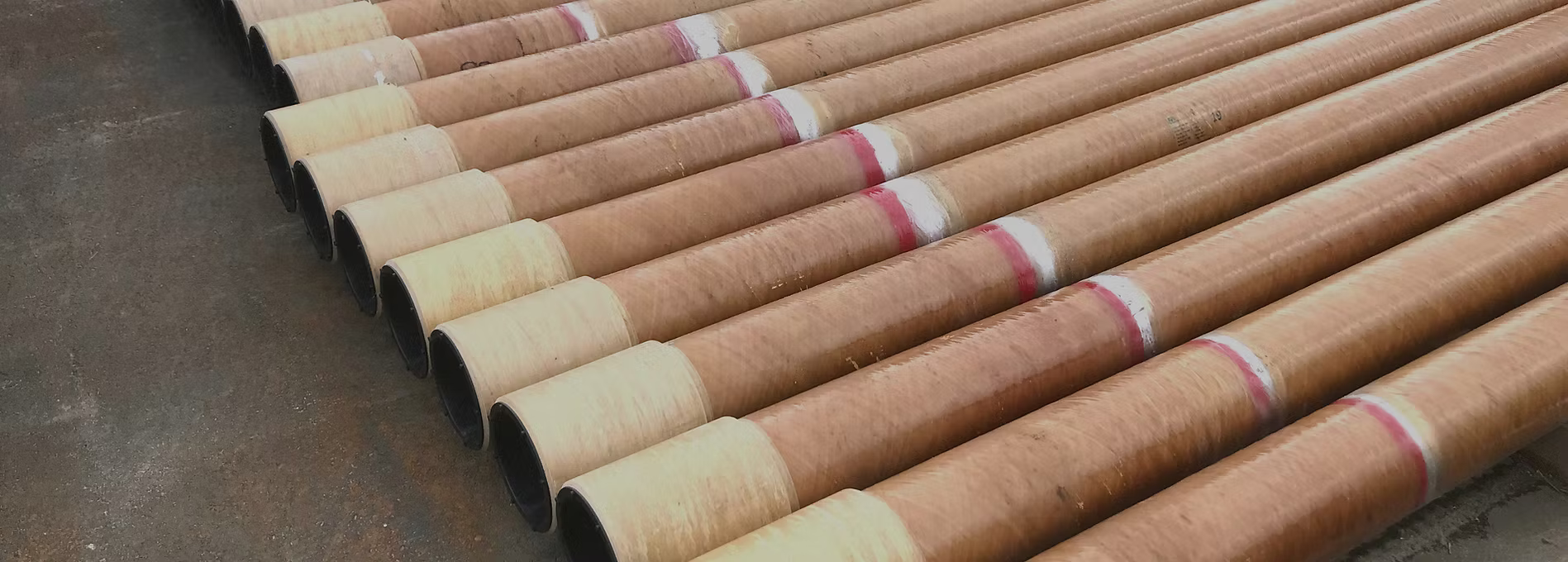
type of fiberglass winding that leads to better resistance to collapse pressures for the pipes and provides better downhole protection.
In many regions of Europe, for example the Netherlands or the North German Basin, geothermal energy can be used for municipal heat supply. However, the high corrosion and scaling rates have been a major hurdle for the technical implementation and the economic viability of geothermal plants in these areas. To overcome this issue GRE GEO is developing glass fiber reinforced epoxy casing systems that enables geothermal projects to be profitable in the long term.
The GRE casing system will be used for new installations as well as a workover for old wells. Research has shown that pipe integrity must be adjusted to meet the special requirements of geothermal wells. A special fiberglass design was developed for this purpose. These new pipes are now undergoing long-term tests in the TU Clausthal laboratory to verify the mechanical properties and maximum strengths of the pipes. In addition, the guidelines and tools for the design, qualification and installation of the GRE piping system have already been developed. In parallel, manufacturing and testing of handling tools for the GRE casing are performed.
“The latest results of our research project show that we can significantly improve the longevity of geothermal wells by using GRE. The new casing systems ensures that no corrosion occurs, whereas scaling deposition is significantly reduced. This extends the operability of the wells and thus prolongs its life span beyond the duration of an average geothermal project,” says Markus Ruff, CEO of Vulcan Energy Engineering (formerly known as gec-co GmbH). “This way, we are securing the technical foundations for geothermal plants that are viable and profitable in the long term – and thereby facilitate a successful heat transition in Europe.”